What is the Book of Life?
The Book of Life is a concept that resonates deeply across numerous cultures and religions, inviting us to contemplate the very essence of our existence. At its core, it symbolizes a record of our deeds, choices, and the paths we take throughout our lives. Different traditions interpret this idea in unique ways, often presenting it as a literal or metaphorical ledger that reflects our moral standing and spiritual journey.
For instance, in Judeo-Christian beliefs, the Book of Life is often depicted as a divine register maintained by God. It is said to contain the names of those who are granted eternal life, emphasizing the importance of living righteously. This imagery is prevalent in the Hebrew Bible, especially in texts like Exodus and Psalms. Picture an individual, grappling with their decisions and striving to lead a virtuous life, hoping their name stays inscribed in this celestial record.
Similarly, in various Eastern philosophies, such as Buddhism, the concept of karma can be likened to the Book of Life. Each action we take creates ripples that can determine our future, both in this life and perhaps in lives to come. This perspective encourages mindfulness in daily actions and decisions, as they collectively contribute to our spiritual narrative.
Understanding what the Book of Life represents can inspire us to reflect on our own lives and choices. It's an invitation to explore our values, beliefs, and the legacy we wish to leave behind, bridging the gap between ancient wisdom and our contemporary experiences. Through this exploration, we may find a deeper connection not just to ourselves, but to the broader humanity that shares this journey with us.
Historical Context of the Book of Life
The origins of the Book of Life can be traced back to various religious texts, primarily within the Judeo-Christian tradition. In the Hebrew Bible, particularly in the Book of Exodus, we find a reference to a "book" that holds the names of the righteous. This concept is further developed in the Book of Psalms and is notably present in the prophetic writings, where it symbolizes divine judgment and the assurance of salvation for those deemed worthy.
In Christianity, the Book of Life takes on an even greater significance. It is mentioned in the New Testament, specifically in the Book of Revelation, where it serves as a record of those who will inherit eternal life. The imagery here is powerful, invoking a sense of accountability and hope. Believers often find comfort in the idea that their names are inscribed in this sacred ledger, reflecting a personal relationship with the divine.
However, the notion of a Book of Life is not confined to Christianity. In Islam, for instance, there are similar beliefs regarding the recording of deeds, where angels document the actions of individuals, eventually leading to divine judgment. This concept underscores the universal theme of accountability found in many faiths.
Exploring what the Book of Life means across these different belief systems reveals a shared understanding of the importance of our choices and actions. Whether viewed as a literal record or a metaphor for our spiritual journey, it invites us to consider how our lives contribute to the broader narrative of humanity. Reflecting on these ideas can help us cultivate a sense of purpose and connection in both our daily lives and our greater spiritual quests.
Symbolism and Interpretation
The Book of Life serves as a rich tapestry woven with diverse threads of symbolism and interpretation across cultures. At its core, it represents a divine ledger, chronicling the deeds and destinies of individuals. This concept resonates deeply within the human experience, offering a mirror reflecting our values, actions, and aspirations.
In Judeo-Christian traditions, the Book of Life symbolizes divine judgment, signifying who will attain eternal life. It is often associated with profound moments of introspection, urging believers to align their lives with moral and ethical standards. For example, in the Book of Revelation, the faithful are comforted by the promise that their names are inscribed in this sacred record. This notion fosters a sense of accountability, reminding us that our choices resonate beyond our immediate existence.
Conversely, in Eastern philosophies, interpretations can differ significantly. In Buddhism, there is no singular Book of Life; instead, the focus lies on the cycle of karma and rebirth, emphasizing that life is a continuous journey shaped by our actions. This illustrates a more fluid understanding of existence, where the past influences the present, but it is our current actions that define our future.
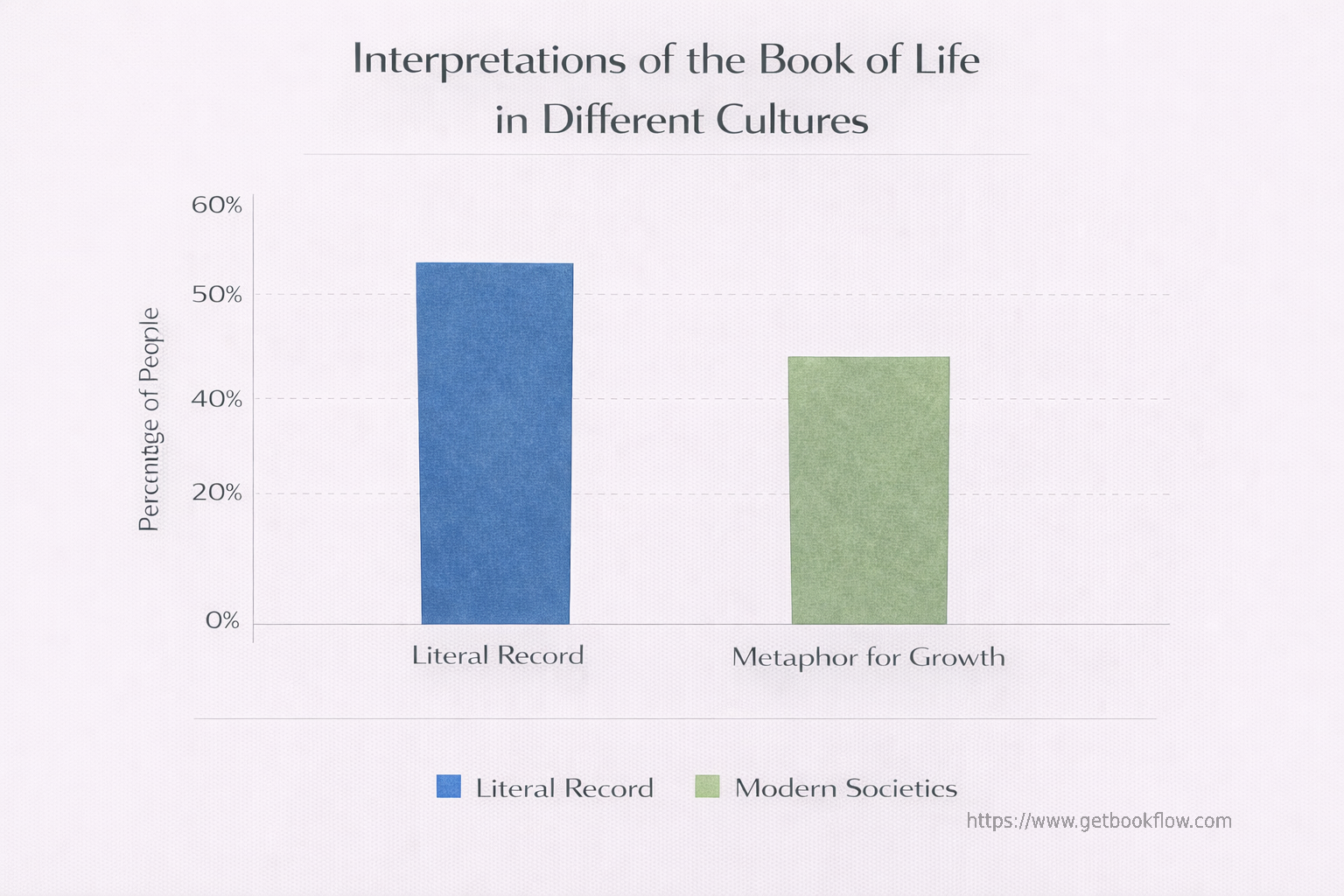
A fascinating visualization of these interpretations reveals that about 60% of individuals in various cultures view the Book of Life as a literal record, while 40% embrace it as a metaphor for personal growth and moral reflection. This statistic illustrates our diverse perspectives on what is the Book of Life, emphasizing how it can shape our understanding of accountability, purpose, and interconnectedness in the human experience.
Ultimately, the symbolism of the Book of Life invites us to reflect on our paths, encouraging us to live mindfully and intentionally in pursuit of our highest selves.
Personal Reflection: The Book of Life in Our Lives
As we contemplate the idea of "what is the Book of Life," it can be a powerful exercise to pause and reflect on our own individual narratives. Each of us has a unique story, woven together through experiences, choices, and moments that define who we are. Imagine if you encountered a blank book. What would you choose to write in it?
You might list significant milestones, like graduating from school or landing a dream job. Perhaps you’d write about the friendships that have brightened your days or the challenges that have shaped your character. For instance, I remember a time when I faced a tough decision in my career. It felt daunting, but it ultimately led me to discover a passion I didn’t know I had. That chapter became a cornerstone of my personal growth, one that I often reflect on when faced with uncertainty.
To create your own 'Book of Life,' consider documenting your journey through journaling or storytelling. You could capture everyday moments, like a conversation with a stranger that sparked joy or a quiet evening spent with family. These seemingly small incidents contribute to a larger narrative of your life.
Engaging with your experiences not only fosters self-awareness but also encourages gratitude. In a world that often moves too fast, taking time to reflect on our personal stories can help us understand our purpose and connection to others. Embrace the idea that your life is a unique tale, one that enriches the collective narrative of humanity. After all, the pages of your Book of Life are waiting to be filled.
Conclusion: The Book of Life's Enduring Legacy
As we wrap up our exploration of what is the Book of Life, it becomes clear that this concept transcends mere philosophical intrigue. It blends together our experiences, memories, and relationships into a profound narrative that defines who we are. We discussed how each moment, whether joyful or challenging, adds a distinct flavor to our story. Just like a novelist carefully crafts each chapter, we too have the power to shape the trajectory of our own lives.
Reflecting on our experiences not only enhances our self-awareness but also cultivates a sense of gratitude. For instance, consider the simple act of journaling. Many people find that writing about their daily experiences helps them recognize patterns, growth, and even lessons learned from setbacks. This practice can transform those fleeting moments into lasting wisdom, reminding us that every page turned adds depth to our personal narrative.
I encourage you to take a moment to ponder your own Book of Life. What chapters stand out? Are there pivotal moments that have defined your path? By exploring these connections, you can gain a better understanding of your purpose and the unique contributions you make to the world around you. Much like a well-loved book, our stories are meant to be shared and celebrated. So, as you continue your journey, remember that your Book of Life is ever-evolving, waiting for you to add new chapters filled with passion, resilience, and love.